

ISO Certification Consultants for Water Treatment, Desalination and Wastewater Operators in UAE, Saudi Arabia & GCC
Reviewed by Nathan ISO Consulting's water and utilities QHSE team, working with desalination operators, treatment plants and wastewater providers across the UAE, Saudi Arabia and GCC.
Most industries can absorb a bad day. A water utility in the Gulf cannot, because the region draws the majority of its potable supply from desalination and there is no meaningful alternative source sitting idle in the background. Continuity planning here is not a paper exercise, and neither is process control, since a plant that drifts out of specification is a public health matter rather than a customer service one.
Nathan ISO Consulting works with desalination plant operators, water treatment companies, wastewater and sewage operators, distribution network managers, industrial water treatment specialists and utility contractors across the UAE, Saudi Arabia and the GCC.
What Has Changed in the Last Decade
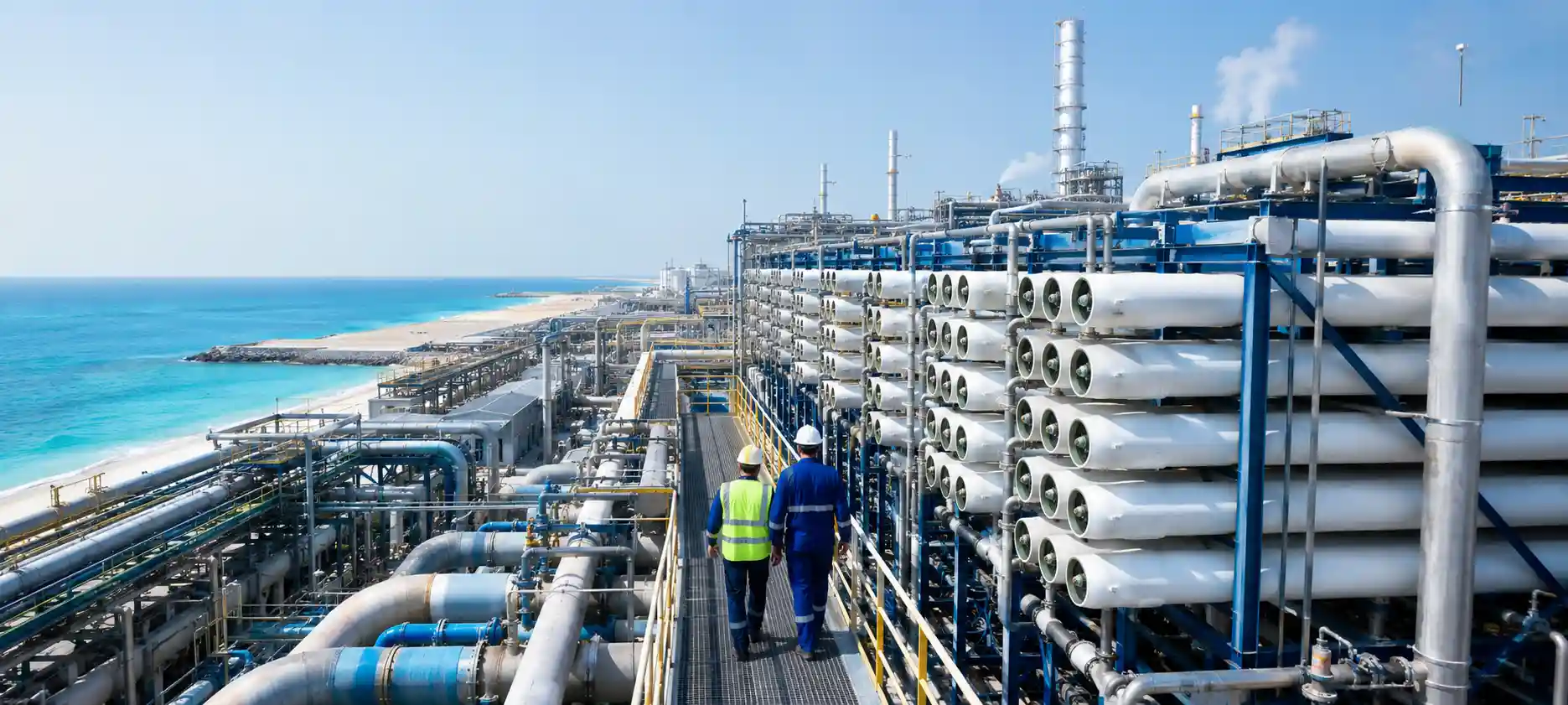
Gulf water infrastructure has expanded enormously, and the way it is owned has changed alongside it. A growing share of production now sits within independent water projects and public-private partnership structures rather than being run directly by a government utility. Those arrangements come with contracts, and contracts come with performance obligations, lenders and offtaker audits.
The practical consequence is that certified management systems have shifted from a nice-to-have to a prequalification expectation. An operator bidding into an independent water project structure without them is at a visible disadvantage before the technical evaluation even begins.
The Regulatory Layer
UAE. Operators engage with utility authorities including DEWA, ADDC, AADC and EtihadWE depending on emirate, alongside Ministry of Energy and Infrastructure requirements. Environmental discharge and brine management fall under Dubai Municipality or the Environment Agency Abu Dhabi, and Civil Defence approvals apply to chemical storage on plant sites.
Saudi Arabia. The framework runs through the Saudi Water Authority and the Water and Electricity Regulatory Authority, with the Saudi Water Partnership Company involved in independent water projects and the National Center for Environmental Compliance governing discharge performance.
None of this is replaced by ISO certification. What certification does is give an operator a structured way to show that these obligations are met consistently across shifts, sites and contractors — rather than depending on the fact that a particular control room supervisor happens to know what he is doing.
Standards That Apply
| Standard | Relevance to Water Operations |
|---|---|
| ISO 9001 | Process consistency, water quality management, customer service performance |
| ISO 14001 | Brine discharge, chemical use, emissions |
| ISO 45001 | Chemical exposure, confined space entry, plant safety |
| ISO 24518 | Crisis management for drinking water and wastewater utilities |
| ISO 46001 | Water efficiency, consumption and loss reduction |
| ISO 50001 | Energy management, significant given desalination energy intensity |
| ISO 55001 | Lifecycle management of plants, pumps, membranes, networks |
| ISO 22301 | Supply interruption and plant outage preparedness |
Most operators start with ISO 9001, ISO 14001 and ISO 45001 as an integrated core. What gets added after that depends on the business: ISO 55001 where the asset base is large and ageing, ISO 50001 where energy is the dominant operating cost, ISO 24518 where a contract carries explicit continuity obligations.
Crisis Management and ISO 24518
ISO 24518 addresses crisis management specifically for drinking water and wastewater utilities. It matters here more than it might elsewhere, because the consequences of a supply interruption in a desert climate escalate quickly and the public communication burden falls on the operator immediately.
Implementation covers crisis identification and escalation, emergency supply and alternative sourcing, communication protocols with authorities and the public, contamination event response, plant outage response, coordination with contractors and emergency services, and structured post-incident review.
Desalination operators, municipal utilities, distribution network operators, wastewater treatment providers, independent water project operating companies, and utility contractors carrying emergency response obligations.
An industrial water treatment specialist serving one manufacturing client is unlikely to need it. ISO 9001 and ISO 14001 will generally cover what that client asks for. The standard earns its cost where public supply or contractual continuity obligations are involved.
Six Things We Tend to Find on Site
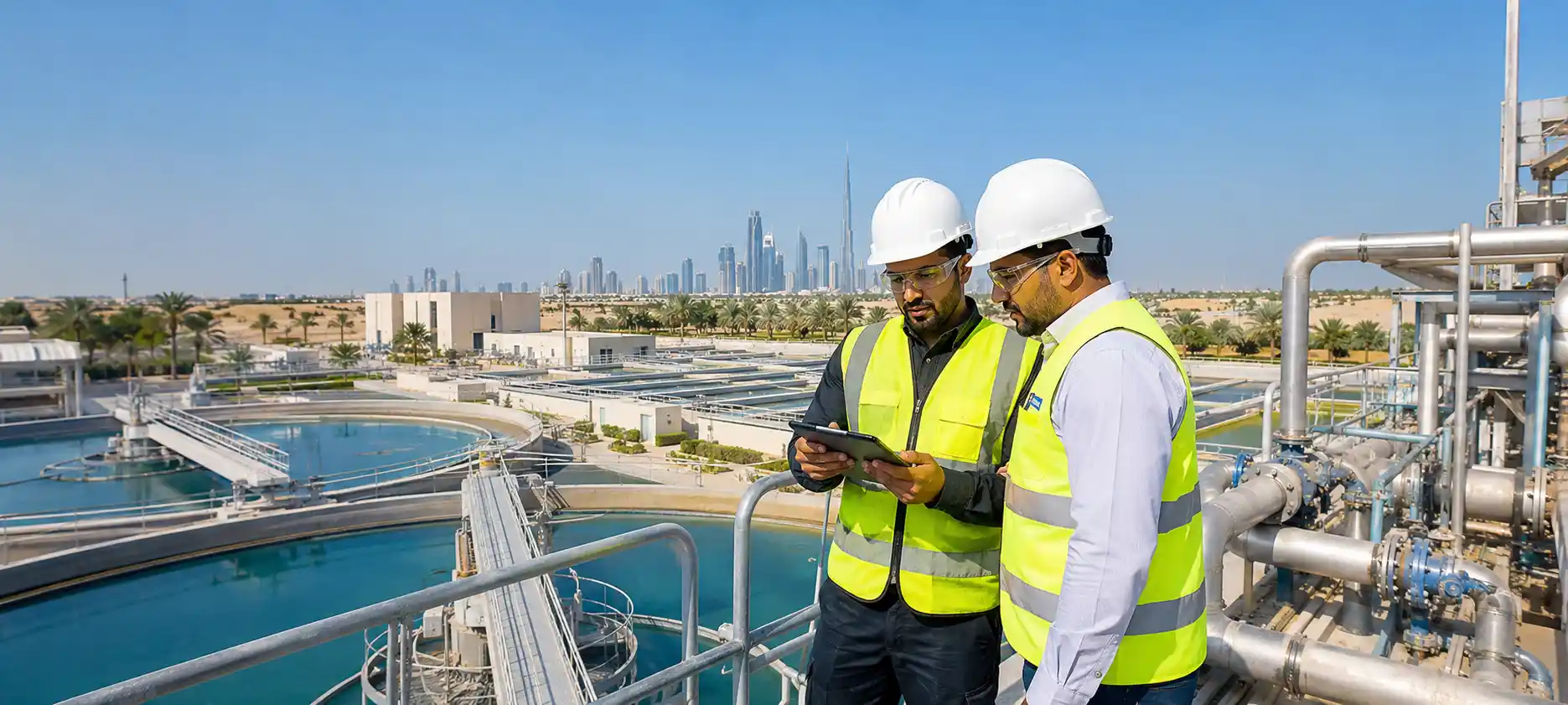
These are not exotic failures. They are the ordinary gaps that accumulate in plants running continuously for years.
Sampling traceability. The sampling regime is usually well designed. The documentation around it often is not, with gaps in chain of custody or ambiguity about which sample point a result came from.
Discharge data as paperwork. Brine and effluent parameters recorded faithfully for submission, but never examined as an operational trend. A slow drift that would have signalled a developing process problem sits unnoticed in a spreadsheet.
Permits during routine work. Confined space and chemical permit discipline is almost always strong during a major shutdown. It weakens during routine maintenance, which is where a disproportionate share of incidents happen.
Reactive maintenance. Membrane replacement, pump overhaul and instrument calibration running on failure rather than plan, creating availability risk that only becomes visible when something stops.
Untested crisis plans. Emergency plans rehearsed internally, without the authorities, contractors or downstream customers who would be central to any real event. The first time those parties coordinate is during the incident.
Energy measured at the gate. Total site consumption tracked without breaking it down by process stage, which makes genuine efficiency work impossible to target.
What an Engagement Looks Like
The first step is a gap assessment across water quality management and sampling, process control and availability, discharge and brine management, chemical handling and plant safety, asset integrity and maintenance, energy and water efficiency, crisis and continuity planning, and contractor management.
Documentation follows, built around how the plant actually runs rather than how a manual imagines it might. That covers sampling and monitoring procedures, process control and operating procedures, environmental and discharge procedures, permit-to-work systems, maintenance and asset procedures, crisis and emergency response plans, and contractor control.
For operators already running ISO 9001, ISO 14001 and ISO 45001 as three separate systems, integration is usually the single highest-value change available. The same operations team is accountable for all three, and splitting them into parallel audit cycles wastes time nobody has.
Before an Offtaker Audit
We support operators preparing for certification audits, surveillance visits, recertification, client and offtaker audits, and regulatory inspection. In practice this means plant and control room walkthroughs, review of water quality and environmental records, permit-to-work evidence checks, and verification that corrective actions closed properly rather than just being marked closed.
SCADA and the Control System Problem
Treatment and desalination plants run on SCADA and industrial control systems that were, in most cases, specified for reliability rather than security. Many were commissioned before anyone considered that a dosing controller might be reachable from a corporate network. The consequences of compromise here are physical rather than commercial, which puts this well ahead of a typical IT security concern.
Through VAPT Security, water operators can access SCADA and industrial control system security assessment, OT network segmentation review, remote access and vendor connection review, and infrastructure penetration testing.

Training Requirements That Surface
ISO 45001 work at water and wastewater sites reliably identifies the same needs: confined space entry, chemical handling, permit-to-work and LOTO, working at height, fire safety and emergency response, first aid, and incident investigation. Available through NIMS.
Getting the Right People Involved
The content of a water utility management system lives in the plant, not the office. If operations and maintenance leadership are not part of the project from the beginning, what gets written will describe an idealised plant that does not exist. The working group typically needs the plant director, operations manager, process and water quality manager, maintenance and asset manager, QHSE manager, environmental compliance officer, control room lead, and contracts manager.
FAQ'S
Generally not as a matter of law. It is frequently required for prequalification on utility contracts and independent water projects, which makes it a practical requirement even where it is not a legal one.
ISO 46001 focuses specifically on water efficiency — measuring, targeting and reducing consumption and loss. ISO 14001 covers environmental management broadly without that particular focus.
ISO 9001, ISO 14001 and ISO 45001 as the core, with ISO 55001 for asset management and ISO 50001 where energy consumption is a strategic cost concern.
Yes. It addresses crisis management for both, including service interruption and contamination scenarios across each.
Yes. It provides a structured framework for lifecycle planning, replacement forecasting and maintenance strategy across major plant assets.
Usually. Common work includes internal audits, surveillance preparation, recertification, closing recurring nonconformities, and adding standards such as ISO 55001 or ISO 50001 into the existing system rather than alongside it.
Where We Work
Desalination plants in Fujairah, wastewater facilities in Abu Dhabi, distribution networks in Sharjah, independent water projects in Jubail, and utility operations across Oman, Qatar, Bahrain and Kuwait. Services cover ISO 9001, ISO 14001, ISO 45001, ISO 24518, ISO 46001, ISO 50001, ISO 55001 and integrated management system implementation.


0
Projects

0
Services

0
Clients Serving

0
Countries Serving