

ISO 27001 and ISO 22301 Consultants for Data Centers, Colocation and Telecom Infrastructure Operators in UAE, Saudi Arabia & GCC
Reviewed by Nathan ISO Consulting's critical infrastructure and information security team, working with data center operators, colocation providers and telecom infrastructure companies across the UAE, Saudi Arabia and GCC.
Customers do not buy floor space and power. They buy the expectation that their systems will still be running at three in the morning during a grid fault, a cooling failure or an intrusion attempt — and they will not take that expectation on trust. They will send an auditor.
Nathan ISO Consulting works with colocation and hyperscale operators, managed hosting providers, telecom infrastructure and tower companies, network operators, cloud infrastructure providers and edge facility operators across the UAE, Saudi Arabia and the GCC.
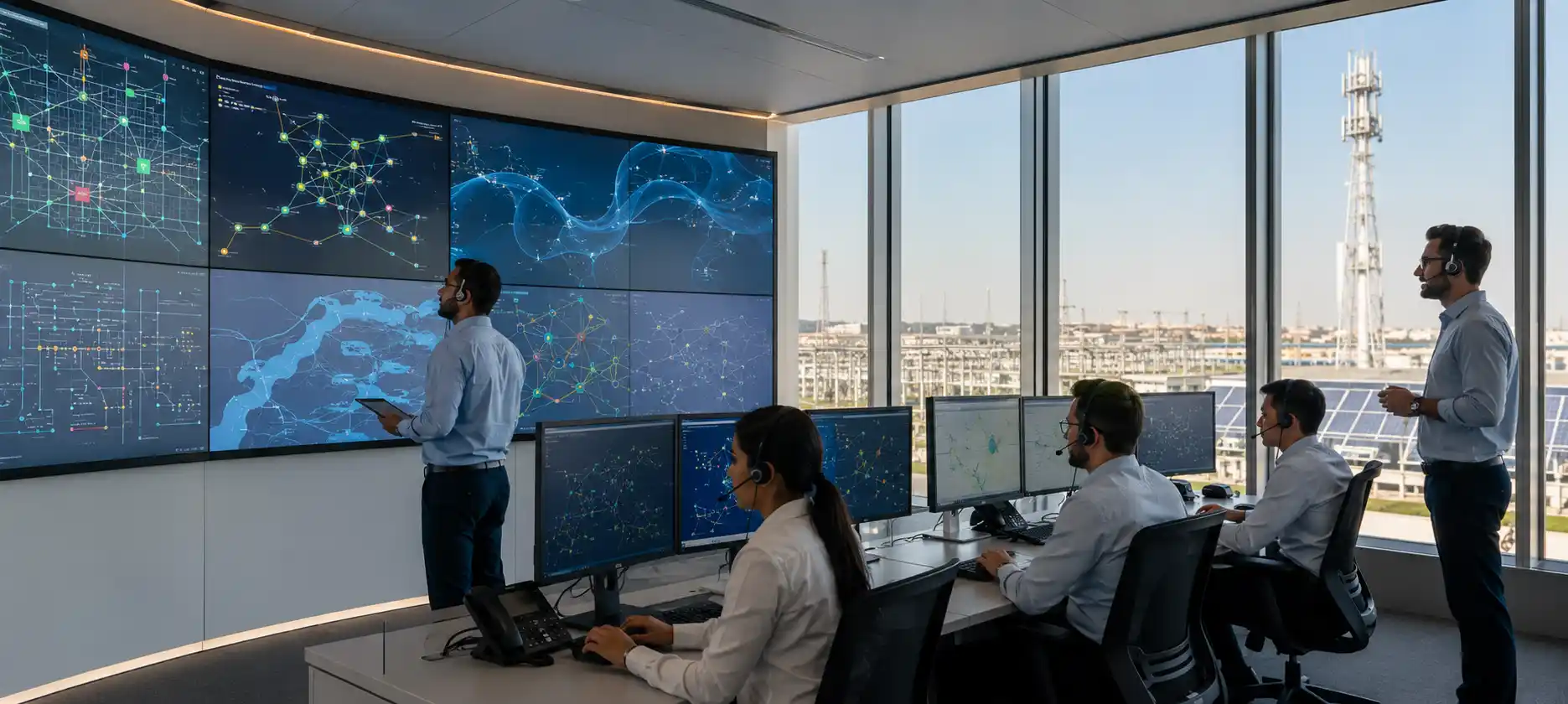
Security and Continuity Are One Question
Most sectors can implement ISO 27001 and ISO 22301 sequentially. This one should not, because customers do not evaluate them separately.
A due diligence team asks about access control and generator failover in the same meeting, and treats a weakness in either as the same category of risk. Implementing the two standards together shares the risk assessment, the incident process, the management review and the internal audit cycle — which for an operations team already stretched across a live facility is the difference between a system that runs and one that gets rebuilt before each audit.
What This Does Not Cover
Uptime Institute Tier certification assesses the physical design and operational sustainability of the facility itself. ISO 27001 and ISO 22301 assess the management systems around security and continuity. They measure different things.
Customers frequently ask for both, and reasonably so — a Tier III facility operated under weak change management still presents real risk. Neither substitutes for the other, and any consultant suggesting otherwise is misreading what customers are asking for.
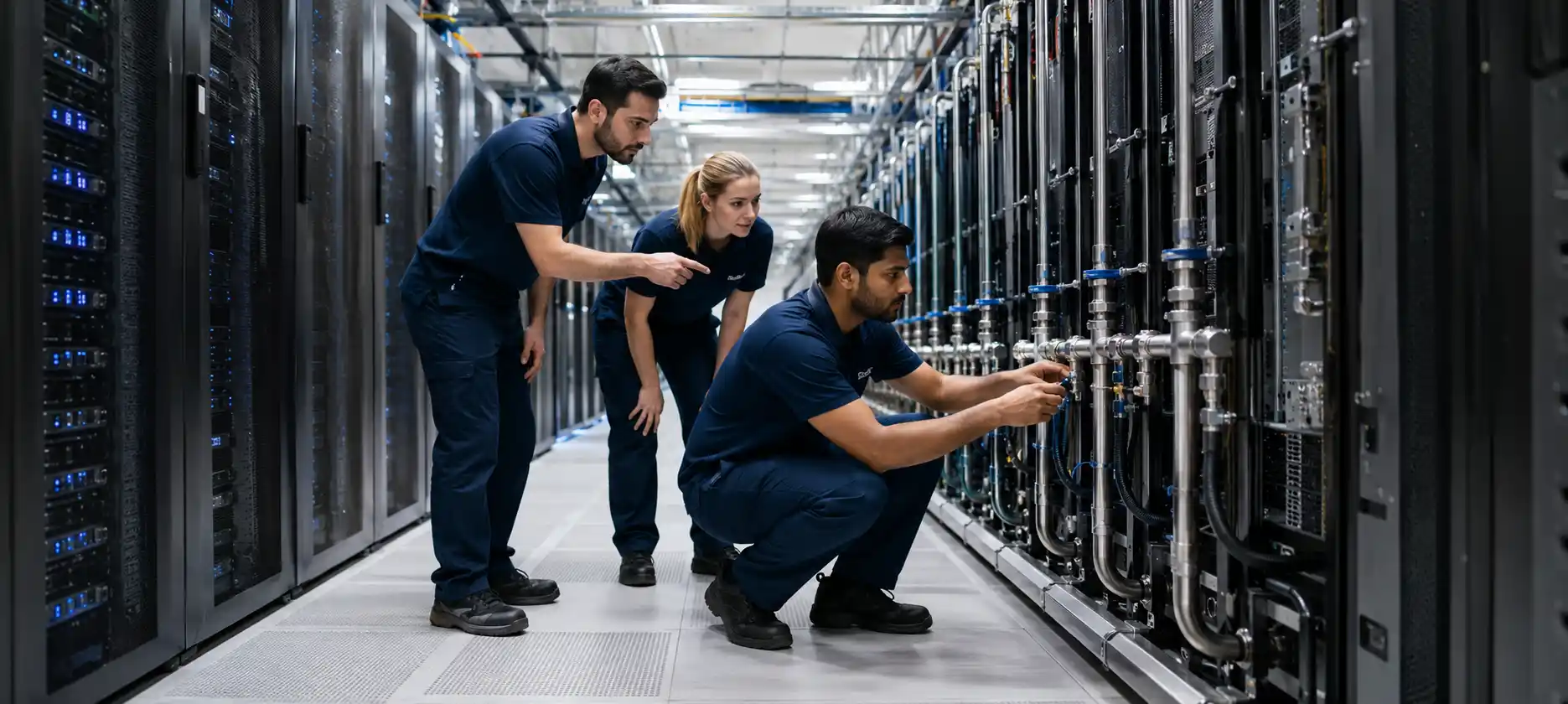
Regulatory Position
UAE. TDRA Information Assurance requirements apply to entities supporting government or critical services, alongside the Personal Data Protection Law. Facilities in DIFC or ADGM fall under those zones' separate data protection regimes.
Saudi Arabia. NCA frameworks apply, including the Essential Cybersecurity Controls and, for national critical systems, the Critical Systems Cybersecurity Controls, with CST licensing and SDAIA data governance requirements alongside.
ISO 27001 certification does not discharge these obligations. The frameworks carry their own control sets and assessment processes, and mapping between them is a distinct exercise that many operators underestimate.
Standards
| Standard | Application |
|---|---|
| ISO 27001 | Information security management, physical and logical access, customer data |
| ISO 22301 | Continuity for power, cooling, connectivity and facility disruption |
| ISO 50001 | Energy management and power usage effectiveness |
| ISO 9001 | Service delivery, SLA management, customer support |
| ISO 55001 | Lifecycle management of generators, UPS, chillers, network plant |
| ISO 27017 | Cloud-specific controls for operators offering managed or cloud services |
| ISO 45001 | Electrical, working at height and confined space safety |
Six Findings From Facility Reviews
Redundancy proven on paper. Generator and UPS failover designed correctly but tested under light load on a predictable schedule, leaving genuine capability under real conditions unverified.
Vendor access without an expiry. Chiller, generator and network engineers granted remote access under informal arrangements that persist indefinitely and sit outside normal access review.
Change management bypassed for urgent work. Emergency infrastructure work performed outside process, with retrospective documentation that never reaches the same standard.
Business impact analysis frozen at implementation. Recovery priorities set once and never revisited as the customer mix shifts toward more critical and more regulated workloads.
Notification timelines untested. Customer and regulatory notification obligations documented but never rehearsed, so actual notification during an incident runs slower than committed.
PUE without sub-metering. Power usage effectiveness calculated at facility level with insufficient sub-metering to locate where losses actually occur.
How We Work
Gap assessment across physical security and access control, information security and customer segregation, power, cooling and connectivity resilience, continuity and disaster recovery, change management, vendor and maintenance control, energy performance, and incident response and notification.
Documentation is built around how the facility actually runs — how the operations centre works, how maintenance windows are approved, how incidents escalate to customers. That covers the policy suite and Statement of Applicability, physical security procedures, continuity and recovery plans, change management for critical infrastructure, vendor and remote access control, incident and notification procedures, and energy monitoring.
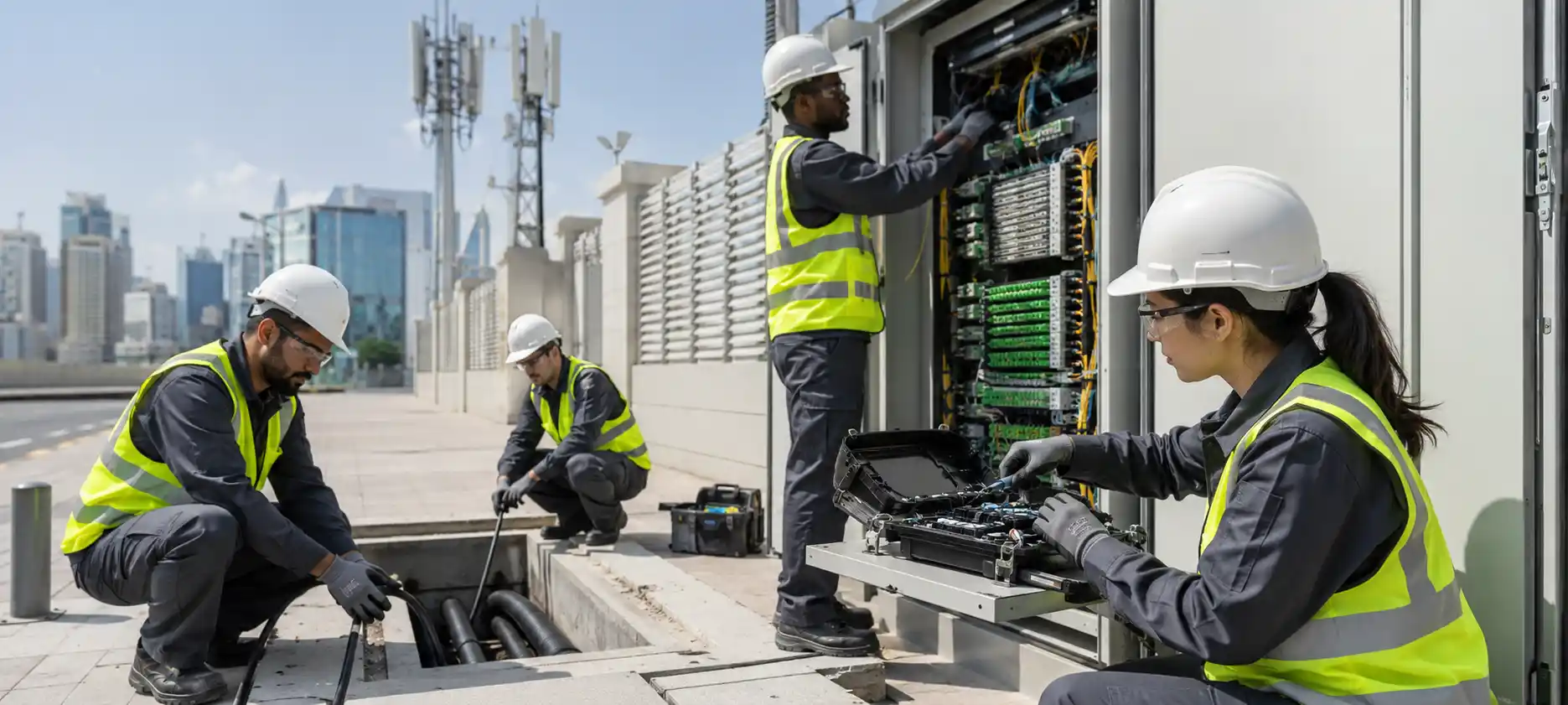
Customer Audits Are the Harder Test
For most operators the certification audit is not the demanding one. Enterprise and government customers running vendor due diligence go deeper, ask for evidence rather than policy, and often arrive with a bank's or a regulator's checklist. We prepare operators specifically for that — facility and operations centre walkthroughs, access and change management evidence review, continuity plan and failover test verification, and questionnaire preparation.
Technical Validation
This sector pairs more closely with technical testing than any other on our site, because customers and regulators increasingly want proof that controls hold rather than assurance that they exist. Building management systems in particular are a recurring weak point — they sit on the same network as everything else and were rarely specified with security in mind.
Through VAPT Security: infrastructure penetration testing, building management system and OT assessment, remote access and vendor connection review, customer portal and provisioning platform testing, and red team and physical security assessment.
Training
Through NIMS: information security awareness, high-voltage electrical safety, LOTO and permit-to-work, working at height, fire safety and emergency response, first aid, and incident investigation.
Joint Ownership
Facility operations and security leadership have to be jointly accountable here, because nearly every control a customer asks about spans both. Splitting ownership produces a system where each side assumes the other covered something.
FAQ'S
Not universally. Operators serving government or regulated customers commonly face it as a contractual or regulatory expectation, particularly under TDRA Information Assurance requirements.
Tier certification addresses the physical design and operational sustainability of the facility. ISO 27001 addresses the information security management system. Operators frequently hold both.
Usually. They share substantial ground in risk assessment, incident response and management review, and customers evaluate security and continuity as one question.
Considerably. These are energy-intensive facilities, and the standard provides structure for improving power usage effectiveness, which affects both cost and sustainability reporting.
Yes, though multi-site scope requires demonstrating that controls operate consistently across every included location.
Yes. We map the customer's audit protocol or security questionnaire against existing controls and evidence, then close gaps before the audit takes place.
Coverage
Colocation facilities in Dubai, hyperscale data centers in Abu Dhabi, telecom tower networks in Sharjah, infrastructure in Riyadh and NEOM, and operators across Oman, Qatar, Bahrain and Kuwait. Services cover ISO 27001, ISO 22301, ISO 50001, ISO 9001, ISO 55001, ISO 27017 and integrated management system implementation.


0
Projects

0
Services

0
Clients Serving

0
Countries Serving