

ISO 41001 and ISO 55001 Consultants for Facilities Management and Outsourced Service Providers in UAE, Saudi Arabia & GCC
Reviewed by Nathan ISO Consulting's facilities management team, working with FM providers, hard and soft services contractors and in-house facilities teams across the UAE, Saudi Arabia and GCC.
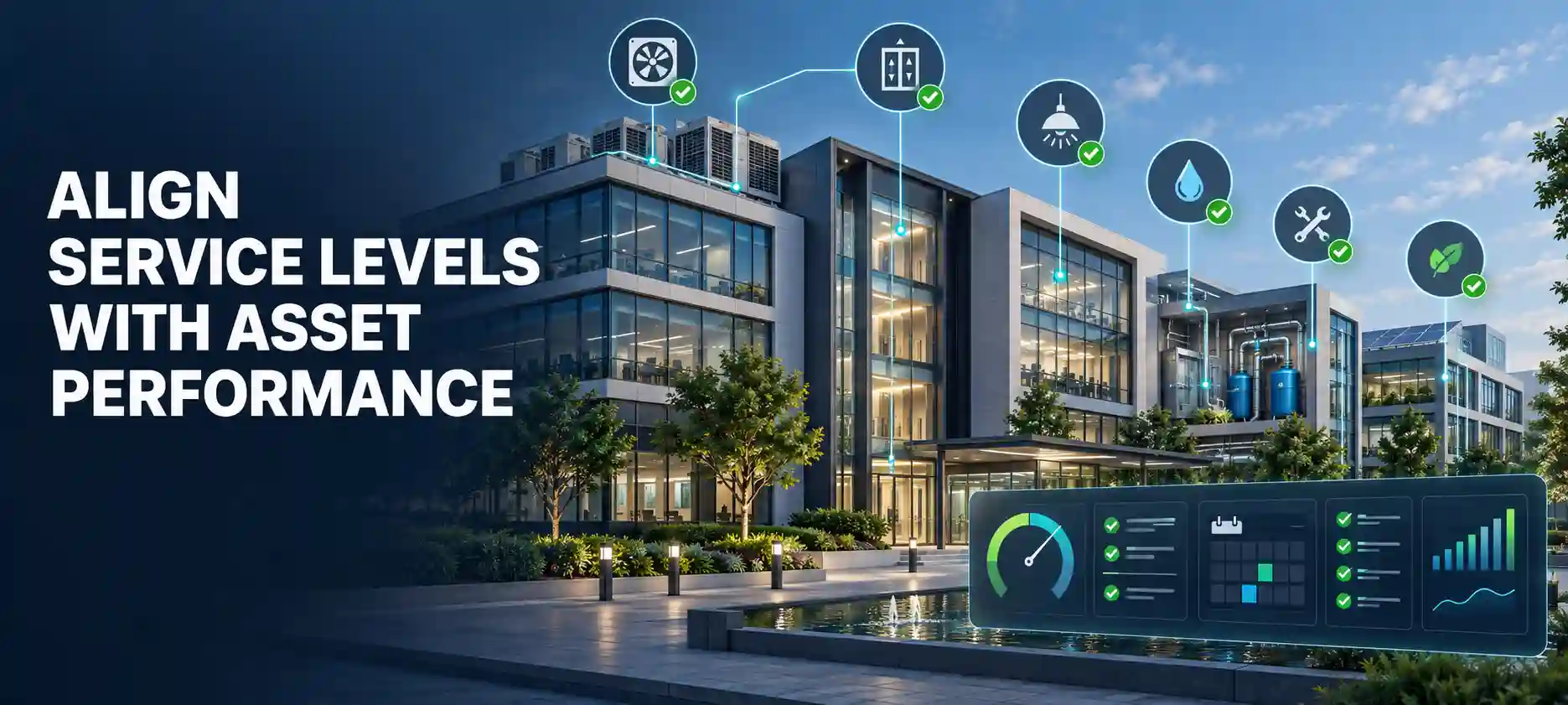
Facilities management is judged almost entirely on the gap between what a contract promises and what a building actually experiences. The service level agreement says four hours; the tenant remembers waiting since Tuesday. Closing that gap consistently, across dozens of buildings and hundreds of staff who never meet the account manager, is the whole discipline.
Nathan ISO Consulting works with integrated FM providers, hard services and MEP maintenance contractors, soft services and cleaning companies, security service providers, in-house facilities teams within large asset owners, and owners associations and community management operators across the UAE, Saudi Arabia and the GCC.

ISO 41001 and Why It Appeared
Facilities management spent decades certifying to ISO 9001 and borrowing frameworks written for manufacturing. ISO 41001 was published because the discipline has requirements those frameworks do not address.
Specifically, it covers the relationship between the demand organisation and the FM provider — how requirements get defined, how service levels get agreed and measured, how the provider integrates with the client's own operations, and how the arrangement is reviewed and improved. That relationship is where FM contracts genuinely succeed or fail, and it is invisible in a standard written around production processes.
It applies to both sides. An in-house facilities function within a bank or a university can implement it as the demand organisation, not only outsourced providers.
Considering ISO 41001 for an in-house team rather than a service contract? It applies to both, and the scope differs meaningfully.
Where Asset Management Fits
Most FM providers eventually confront the same tension: they are measured on responsiveness and cost while the assets they maintain deteriorate on a timescale longer than their contract.
ISO 55001 addresses that directly by connecting maintenance decisions to asset lifecycle consequence. For an FM provider it strengthens the case for planned work over reactive callouts. For an asset owner it turns a maintenance budget conversation into a lifecycle one. Providers bidding for long-term contracts on high-value assets increasingly find it requested, particularly where the client has adopted it themselves.
Standards
| Standard | Application |
|---|---|
| ISO 41001 | Facility management system, demand-provider relationship, service levels |
| ISO 55001 | Asset lifecycle management for maintained building systems and equipment |
| ISO 9001 | Service delivery consistency, complaint handling, multi-site standardisation |
| ISO 45001 | Working at height, electrical work, confined space, chemical handling |
| ISO 14001 | Waste, water, energy and chemical use across managed properties |
| ISO 50001 | Energy performance in managed buildings, often a contracted obligation |
| ISO 22301 | Continuity for critical building services and emergency response |
| ISO 27001 | CAFM data, tenant information, building management system access |
What FM Reviews Find
SLA reporting that measures the wrong thing. Response time recorded from ticket assignment rather than tenant report, producing compliant figures alongside dissatisfied occupants.
PPM schedules completed on paper. Planned preventive maintenance signed off at the scheduled frequency without evidence the task was performed to any defined standard, which surfaces when equipment fails inside its maintenance interval.
Mobilisation knowledge that never transfers. The team that wins and mobilises a contract holds the client's requirements in memory, and the operational team that inherits it works from a schedule rather than an understanding.
Subcontractor competency assumed. Specialist subcontractors for lifts, fire systems and HVAC engaged repeatedly without current verification of certification, insurance and technician competency.
Permit systems that weaken on small jobs. Rigorous permit control for planned shutdowns, informal practice for a two-hour reactive job on a live electrical panel, which is where incidents concentrate.
Asset registers inherited and never verified. Registers taken over at mobilisation from the previous provider, containing equipment that has been replaced, removed or was never there.
Energy obligations in the contract but not in the system. Contracted energy performance targets that no one has translated into monitoring, targeting or accountability.
How We Work
Gap assessment across service level definition and measurement, PPM planning and completion evidence, asset register accuracy, subcontractor management, permit-to-work discipline, competency and licensing records, energy and environmental obligations, client relationship and reporting, and mobilisation and demobilisation processes.
Documentation is built for a dispersed workforce, which changes how it has to read — service delivery procedures usable by technicians on site, permit systems that hold under time pressure, asset and PPM procedures, subcontractor approval criteria, client reporting and review formats, and incident and complaint handling.
Providers holding ISO 41001 alongside ISO 9001, ISO 45001 and ISO 14001 almost always integrate, since a single operations structure delivers against all of them across the same portfolio.
Tenders and Client Audits
FM contracts are won and lost on prequalification, and certification is frequently a threshold criterion rather than a scoring one. We prepare providers for certification audits, surveillance visits, recertification, client audits and tender prequalification — site and building walkthroughs, PPM and asset record review, permit and competency evidence checks, and corrective action verification.
Tender submission or client audit approaching? Request a readiness review before it lands.
Building Systems and CAFM Data
FM providers hold administrative access to building management systems, access control, CCTV and fire systems across client properties, often through remote connections established during mobilisation and never reviewed. That access represents a concentration of risk that clients are beginning to ask about. Through VAPT Security: building management system and OT assessment, CAFM and client data platform review, remote access and vendor connection review, and infrastructure penetration testing.
Training
Through NIMS: working at height, confined space entry, electrical safety and LOTO, permit-to-work, chemical handling for cleaning operations, manual handling, fire safety and emergency response, first aid, and incident investigation.
Who Needs to Be Involved
Account and contract managers hold the client relationship the system is meant to formalise, and leaving them out produces documentation that describes service delivery nobody has agreed with the client. Alongside them the operations director, hard and soft services managers, QHSE manager, CAFM and reporting lead, procurement for subcontractors, and mobilisation leads.
FAQ'S
The demand-provider relationship specifically — requirement definition, service level agreement, integration with the client organisation, and joint review. ISO 9001 addresses quality management generically without that relational focus.
Yes. The standard addresses both demand organisations and service providers, and in-house teams within large asset owners implement it as the demand side.
Not universally, though it appears increasingly in prequalification criteria for larger contracts. ISO 9001, ISO 45001 and ISO 14001 remain the more commonly specified trio.
Both do. Owners use it for lifecycle and capital planning; providers use it to structure maintenance strategy and to demonstrate that their approach protects asset life rather than just meeting response times.
Usually by the provider's own organisation and services rather than by client property, with sites sampled during audit. The scope statement should describe services delivered rather than list every building.
The certificate belongs to your organisation and its defined scope, so new contracts within that scope are covered. A materially different service type may require a scope extension.
Through measurement defined the same way the client defines it, with the measurement point agreed explicitly. Most disputes we see trace to the provider and client measuring response time from different events.
Not necessarily, but their competency, insurance and safe systems of work need verifying and recording, because work performed under your contract sits within your management system's scope.
ISO 50001 provides the monitoring, targeting and accountability structure. Where a contract carries energy obligations, it converts them into a managed process rather than an annual reconciliation.
It depends on your client base. Where clients are sophisticated asset owners running structured FM procurement, it differentiates meaningfully. Where they are not, ISO 9001 with strong ISO 45001 may serve the same commercial purpose at lower cost.
Coverage
Integrated FM providers and MEP contractors across Dubai, Abu Dhabi and Sharjah, community and owners association managers throughout the UAE, and facilities providers in Riyadh, Jeddah and Dammam, plus Oman, Qatar, Bahrain and Kuwait. Services cover ISO 41001, ISO 55001, ISO 9001, ISO 45001, ISO 14001, ISO 50001 and integrated management system implementation.
Request a Facilities Management Gap Assessment and find out where your SLA reporting and your tenant experience diverge.


0
Projects

0
Services

0
Clients Serving

0
Countries Serving