


ISO Certification & QHSE Compliance for Construction, Engineering & Infrastructure Companies in UAE, Saudi Arabia & GCC
Construction, engineering and infrastructure projects succeed when quality, safety, environmental controls, project documentation and contractor management are all working together.
For contractors, engineering consultancies, infrastructure developers, MEP companies, civil contractors, road and transport contractors, fit-out companies and specialist subcontractors, ISO certification can support much more than an external audit. A well-implemented management system can improve project control, tender readiness, contractor prequalification, client confidence, site safety, environmental performance and delivery consistency.
Nathan ISO Consulting provides ISO certification consulting for construction, engineering and infrastructure companies in the UAE, Saudi Arabia and across the GCC, supporting organizations working on buildings, roads, bridges, utilities, industrial facilities, rail, airports, ports, infrastructure developments and large EPC projects.
Relevant standards can include:
Nathan supports contractors and engineering companies across Dubai, Abu Dhabi, Sharjah, Al Ain, Ras Al Khaimah, Fujairah, Ajman, Jebel Ali and the wider UAE, together with companies in Riyadh, Jeddah, Dammam, Al Khobar, Jubail and other Saudi industrial centres, as well as Qatar, Oman, Bahrain and Kuwait.
Planning for ISO certification, contractor prequalification or an upcoming client audit?
From Tender to Handover: Where ISO Fits into Construction Projects
Construction companies do not operate through one process.
A project may involve tendering, design review, procurement, subcontractor appointment, mobilization, temporary works, site execution, inspection, testing, commissioning and final handover.
Each stage creates a different set of management-system risks.
During tendering, the risk may be incomplete review of customer requirements.
During procurement, it may be weak supplier qualification.
During construction, the risk may shift to workmanship, inspection, nonconformities, safety incidents or environmental impacts.
During handover, poor control of as-built drawings, testing records and operation manuals can delay project closure.
This is why ISO certification for construction companies should not be built as a set of generic procedures. The management system must follow the actual project lifecycle.
Construction Compliance in Dubai and the UAE
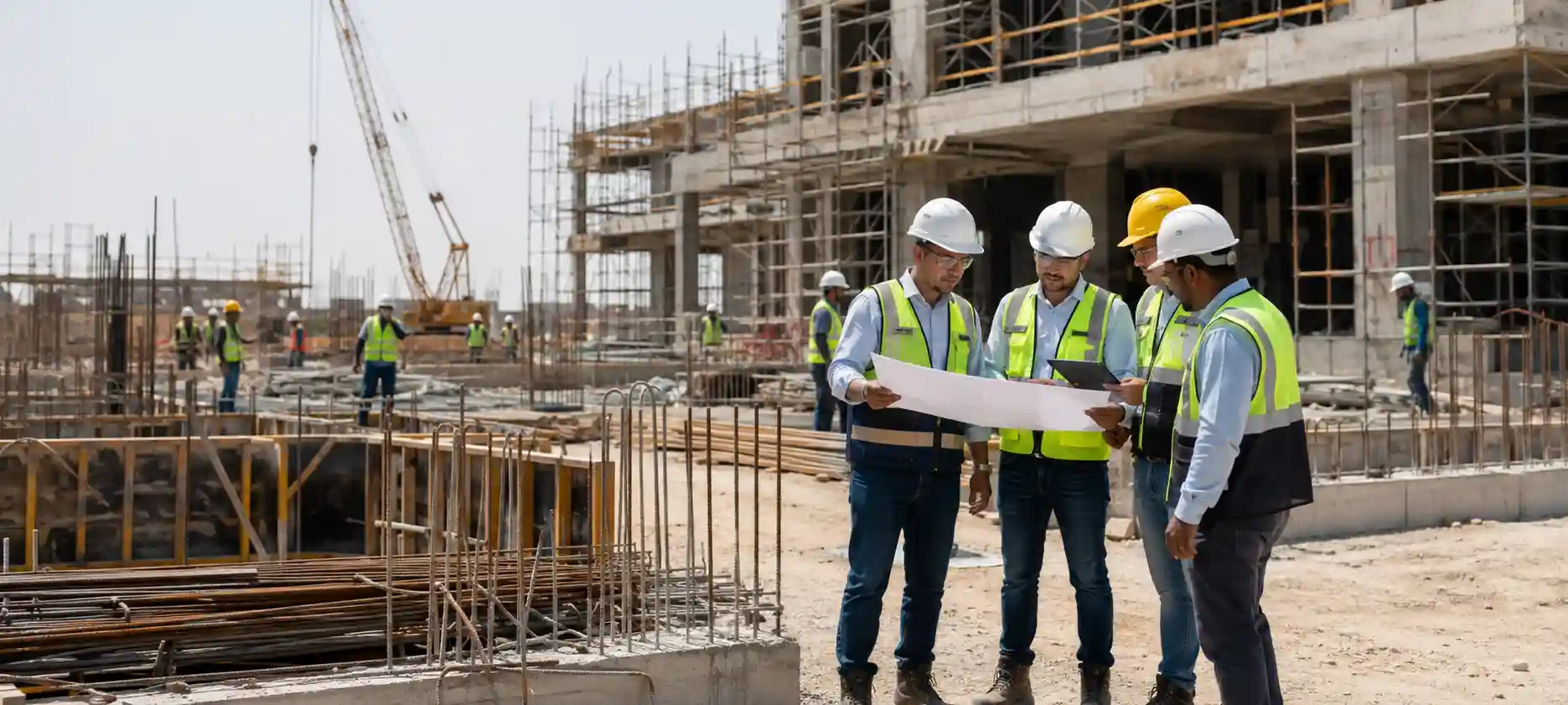
Construction companies operating in Dubai may need to consider requirements associated with Dubai Municipality, the Dubai Building Code, contractor and consultant licensing, Trakhees requirements and RTA contractor or supplier prequalification, depending on their activities and project location.
Dubai Municipality maintains licensing and qualification requirements for consultants and contractors operating in the emirate and requires construction companies to meet approved conditions and standards before being registered to practice relevant contracting activities.
The Dubai Building Code establishes minimum requirements for building design and construction across Dubai.
For projects within Trakhees jurisdictions, its accreditation framework addresses design, construction and HSE performance, with regulations linked to projects undergoing Trakhees permitting processes.
Dubai RTA also operates supplier and contractor registration and prequalification mechanisms for organizations seeking to participate in relevant transport and infrastructure opportunities.
ISO certification does not replace these authority requirements. Instead, it can help construction companies maintain the internal processes, responsibilities, records and corrective-action systems needed to manage compliance more effectively.
Construction Safety Compliance in Abu Dhabi
Construction and engineering companies working in Abu Dhabi also need to consider the Abu Dhabi Occupational Safety and Health System Framework – ADOSH-SF.
The current ADOSH-SF framework includes mandatory Codes of Practice covering specific workplace and construction risks. Abu Dhabi Public Health Centre states that these Codes of Practice provide minimum mandatory occupational safety and health requirements and apply to relevant entities.
Construction-specific requirements include areas such as construction management planning, permit-to-work systems, temporary structures, underground work, plant and equipment, electrical safety and steel erection.
For companies implementing ISO 45001 in Abu Dhabi, these regulatory controls should be incorporated into the broader occupational health and safety management system rather than treated as a separate paperwork exercise.
Construction Compliance in Saudi Arabia
Construction companies in Saudi Arabia work within a rapidly developing regulatory and infrastructure environment.
The Saudi Building Code contains regulatory requirements and technical specifications relating to building and construction with the objective of supporting safety and appropriate construction practices.
Contractors and engineering companies delivering projects in Riyadh, Jeddah, Dammam, Jubail, Al Khobar and other Saudi markets may also encounter customer-specific prequalification, project QHSE requirements, technical specifications and contractual management-system requirements.
ISO 9001, ISO 14001 and ISO 45001 can provide a coordinated framework for managing these obligations while strengthening project controls.
What ISO Standards Solve for Construction Companies
| Construction Challenge | Relevant ISO Standard | Practical Benefit |
|---|---|---|
| Rework, defects and inconsistent workmanship | ISO 9001 | Improves quality planning, inspection, process control and corrective action |
| Environmental impacts from construction | ISO 14001 | Controls waste, dust, noise, chemicals, spills and environmental obligations |
| Site accidents and high-risk work | ISO 45001 | Strengthens hazard identification, worker protection and operational safety |
| Sensitive drawings and project data | ISO 27001 | Protects engineering documents, tenders, BIM information and client data |
| Project or supply-chain disruption | ISO 22301 | Supports continuity planning and recovery for critical activities |
| Energy-intensive facilities and operations | ISO 50001 | Supports structured energy-performance improvement |
| Infrastructure and asset lifecycle | ISO 55001 | Supports long-term management of physical assets and infrastructure |
For many construction organizations, the most practical starting point is an Integrated Management System combining ISO 9001, ISO 14001 and ISO 45001.
ISO 9001 for Construction Quality Management
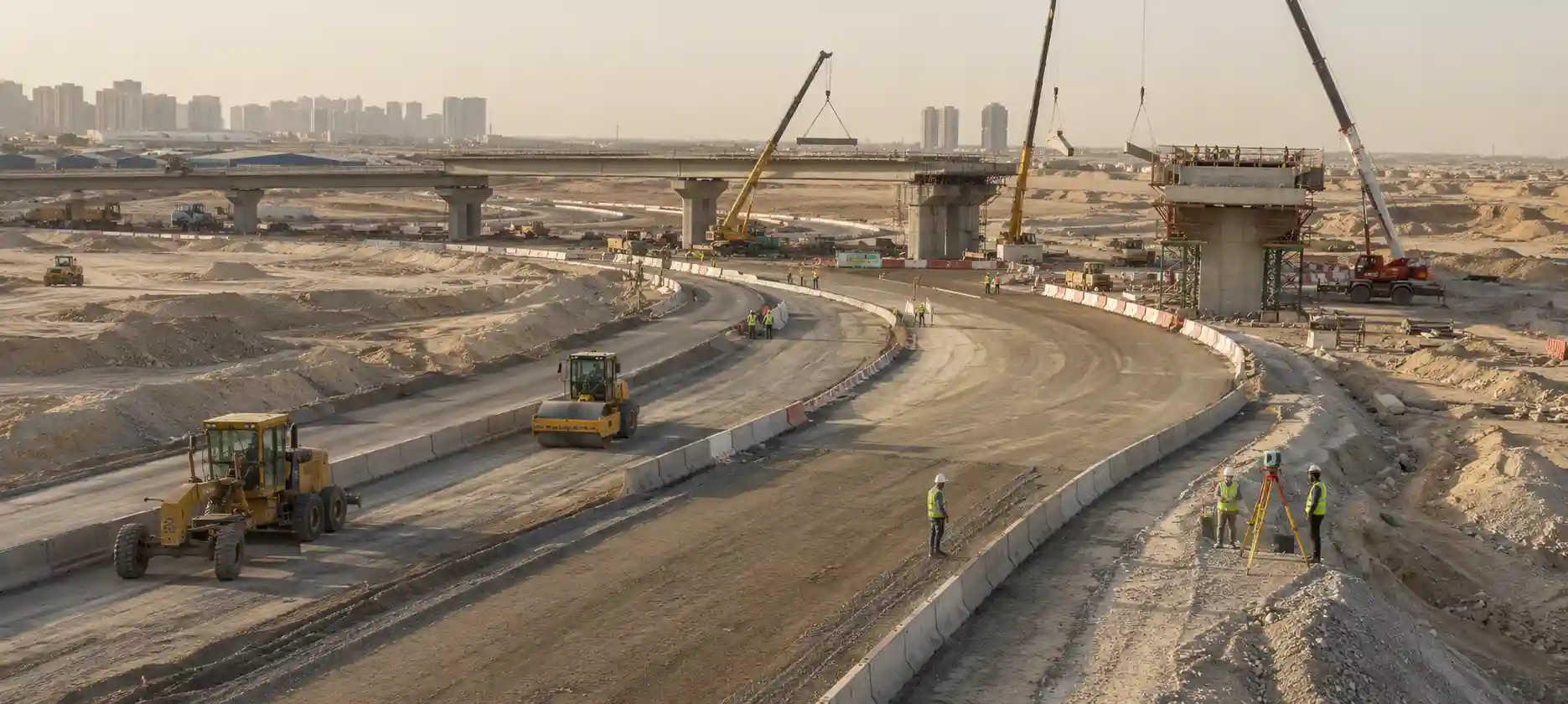
Quality failures in construction are expensive.
They can result in:
ISO 9001 helps establish structured control over areas such as:
For civil contractors, MEP contractors, fit-out companies, infrastructure contractors and engineering consultancies, ISO 9001 can provide the backbone for consistent project execution.
Is your project generating repeated NCRs?
Nathan can review the quality-management process and identify whether the root cause lies in procurement, supervision, document control, competency, inspection or subcontractor management.
ISO 45001 for Construction Safety
Construction work can involve activities such as excavation, lifting, work at height, temporary electrical installations, hot work, confined spaces, scaffolding, machinery and vehicle movements.
ISO 45001 provides a systematic framework for identifying hazards, evaluating occupational health and safety risks, establishing controls and monitoring performance.
A construction-focused ISO 45001 system may cover:
Where additional workforce competency support is required, relevant safety programmes can be cross-linked to NIMS.ae, including Working at Height, LOTO, Confined Space, Lifting Safety, Excavation Safety, First Aid and Incident Investigation.
ISO 14001 for Construction Environmental Management
Construction sites can create environmental impacts through:
ISO 14001 helps organizations identify significant environmental aspects and establish operational controls around them.
This is particularly relevant for large infrastructure projects, industrial developments and contractors working in environmentally sensitive areas.
Nathan can support development of:
The Construction IMS: One System Instead of Three
A contractor certified separately to ISO 9001, ISO 14001 and ISO 45001 can easily end up maintaining duplicate procedures, audits and management reviews.
Nathan can help create an Integrated Management System for construction and engineering companies.
Instead of separate systems, common areas such as:
can be managed through one integrated framework.
Project-specific quality, environmental and safety requirements can then sit underneath this common management structure.
This approach is particularly useful for main contractors, EPC companies, engineering contractors and infrastructure organizations managing several projects simultaneously.
Where Construction Management Systems Commonly Break Down
Contractual requirements are sometimes reviewed during bidding but are not fully transferred into project execution.
This can result in missed inspection requirements, documentation gaps or customer dissatisfaction.
Supplier qualification may happen once during onboarding without consistent performance review.
Immediate correction is completed, but root cause and effectiveness are not evaluated.
Multiple revisions of drawings, method statements or inspection forms may circulate between site teams.
Main contractors remain exposed to poor subcontractor quality, unsafe practices or inadequate competency.
Audits may confirm that procedures exist without verifying whether site activities actually follow them.
Nathan's role is to identify these operational gaps before a certification body, customer or project consultant does.
Construction & Infrastructure ISO Project Health Check
Instead of repeating the same downloadable checklist used for other industries, this page can use a Project Health Check as its lead-generation tool.
Quality
Are inspection and test activities linked to approved project requirements?
HSE
Are high-risk activities controlled and verified?
Environment
Are significant environmental aspects monitored?
Subcontractors
Are contractor qualifications and performance reviewed?
Documents
Are teams using current approved drawings and procedures?
Nonconformities
Are root causes and recurrence risks being addressed?
Management Oversight
Are project KPIs, audit findings and significant risks escalated to management?
This can provide a more engaging conversion route than another generic PDF.
How Nathan Supports Construction, Engineering & Infrastructure Companies
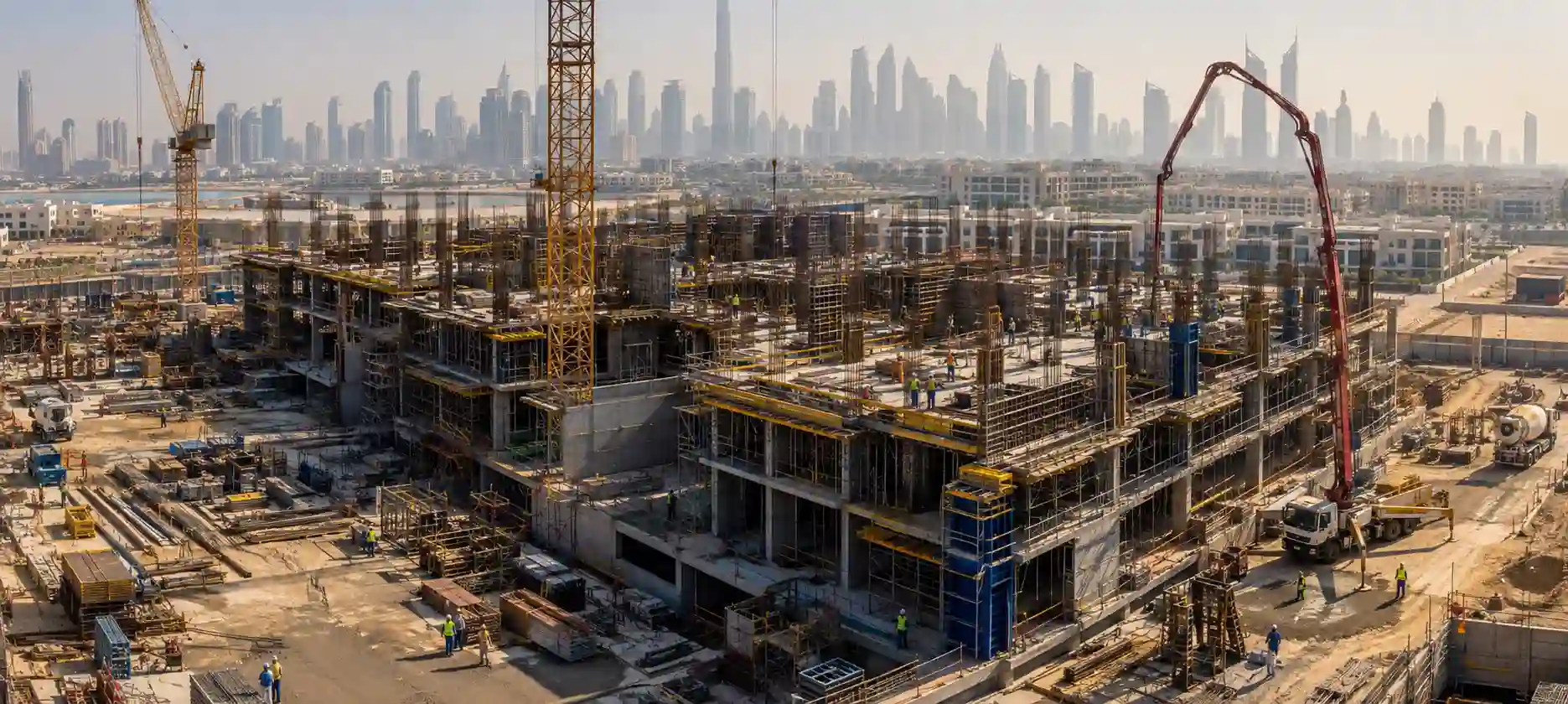
Nathan ISO Consulting can support:
Who We Work With
Nathan's construction and engineering consulting support can be relevant to:
Why Nathan ISO Consulting for Construction & Infrastructure?
The management system is connected to project workflows rather than being written only around ISO clauses.
Quality, environmental and occupational safety requirements can be developed under one coordinated framework.
Where relevant, the management system can take account of requirements associated with Dubai Municipality, Trakhees, RTA, ADOSH-SF, Saudi Building Code and client-specific project requirements without incorrectly claiming that ISO certification replaces regulatory approval.
Nathan can help contractors strengthen the evidence expected during certification, client audits and contractor assessments.
Where ISO 45001 implementation identifies competency needs, relevant construction safety training can be connected to the wider NIMS ecosystem.
FAQ'S
ISO 9001, ISO 14001 and ISO 45001 are commonly relevant because they address quality, environmental management and occupational health and safety. Other standards such as ISO 27001, ISO 22301, ISO 50001 and ISO 55001 may be appropriate depending on the company's activities.
ISO 9001 should not be described as universally mandatory for every construction company in Dubai. Contractors must comply with relevant licensing, registration, building and project requirements, while ISO certification may additionally be required by customers, tenders or prequalification processes. Dubai Municipality maintains specific registration and licensing requirements for consultants and contractors.
No. ISO 45001 and ADOSH-SF are separate frameworks. Companies operating in Abu Dhabi must comply with applicable mandatory occupational safety and health requirements, while ISO 45001 can provide the management structure for organizing and monitoring those controls.
Yes. Construction companies can integrate common management-system requirements into one IMS while maintaining specific operational controls for quality, environmental management and occupational safety.
ISO certification can strengthen evidence of formal management-system controls and is often commercially valuable in tendering and contractor assessment. However, each authority or customer can maintain its own prequalification criteria. RTA, for example, operates its own contractor and supplier registration and prequalification mechanisms.
ISO certification assesses conformity with a specific management-system standard. Dubai Municipality contractor registration and licensing are local requirements governing eligibility to undertake relevant construction activities in Dubai. They serve different purposes.
Yes. Support can focus specifically on root-cause analysis, internal audits, supplier controls, document management, corrective actions, project quality procedures and preparation for surveillance or recertification audits.
Construction ISO Consultants in UAE, Saudi Arabia & GCC
Nathan ISO Consulting supports construction, engineering and infrastructure businesses across Dubai, Abu Dhabi, Sharjah, Al Ain, Jebel Ali, Ras Al Khaimah, Fujairah and Ajman, together with companies operating in Riyadh, Jeddah, Dammam, Jubail and Al Khobar.
Our wider GCC coverage extends to Qatar, Oman, Bahrain and Kuwait.
Whether you are a civil contractor in Dubai, infrastructure company in Abu Dhabi, EPC contractor in Saudi Arabia, MEP company in Sharjah, road contractor in Riyadh or engineering consultancy working across the GCC, Nathan can support the development, integration and improvement of your ISO management systems.
Our services include ISO 9001 consulting for construction companies, ISO 14001 environmental consulting, ISO 45001 safety management consulting, Integrated Management System implementation, construction ISO internal audits, contractor certification readiness and ISO consultancy for engineering and infrastructure projects.
Build a management system that works from tender stage to project handover.


0
Projects

0
Services

0
Clients Serving

0
Countries Serving