

ISO 55001 and ISO 50001 Consultants for Power Generation, Grid and Renewable Energy Companies in UAE, Saudi Arabia & GCC
Reviewed by Nathan ISO Consulting's energy and asset management team, working with generators, grid operators and renewable developers across the UAE, Saudi Arabia and GCC.
Power assets punish neglect slowly. A turbine maintained reactively, a substation whose condition data was collected but never trended, a solar plant whose output decline was written off as soiling for two seasons — none of these produce an incident report. They produce a capital expenditure request four years later, and by then the decision that caused it is nobody's responsibility.
Nathan ISO Consulting works with conventional generators, solar and wind developers and operators, grid and transmission operators, independent power producers, energy service companies and O&M contractors across the UAE, Saudi Arabia and the GCC.
Why This Sector Started Caring About Certification
Two things changed at roughly the same time. The Gulf's generation mix began shifting toward renewables at scale, through the Dubai and Abu Dhabi solar programmes and Saudi Arabia's Vision 2030 targets. And ownership moved toward independent power producer structures, which brought international lenders, equity investors and offtakers into projects that had previously been government-run end to end.
Lenders and offtakers conduct due diligence. They ask how the asset base is managed over a twenty-year concession, how availability obligations will be met, and what evidence exists that safety and environmental performance is controlled rather than assumed. Certified management systems answer those questions in a format that diligence teams recognise, which is why they now appear in prequalification criteria that once listed only technical capability.
The Asset Management Case
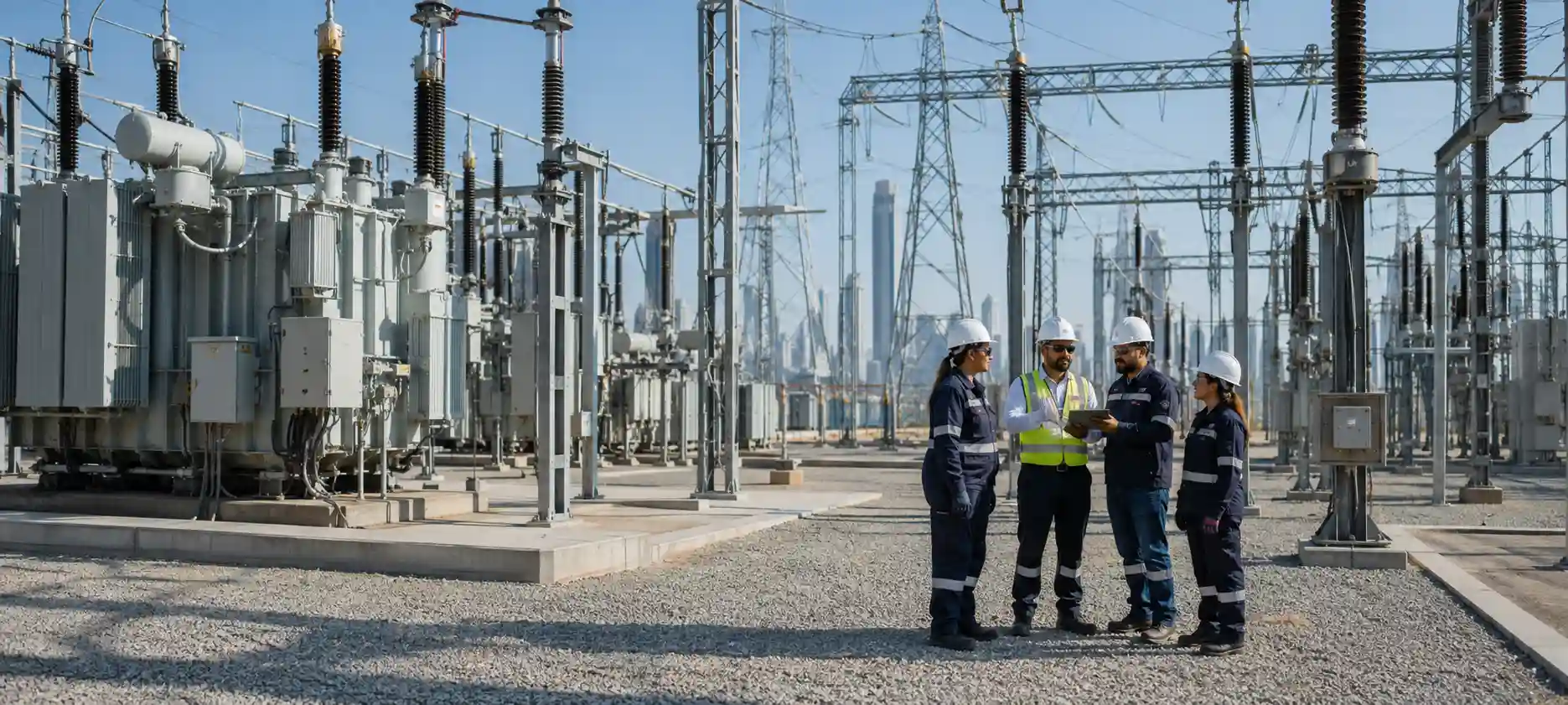
Of everything on this page, ISO 55001 is the standard that most often changes how an energy business actually operates rather than just how it documents itself.
The reason is that it forces a connection most organisations never make explicitly: between maintenance activity and capital consequence. A maintenance department optimising for this year's budget will defer work that shortens asset life, and nothing in a conventional quality system will flag that as a problem. ISO 55001 puts asset criticality, lifecycle cost, risk and capital planning into one framework, which is where the trade-off becomes visible.
Implementation typically touches asset register accuracy and criticality classification, lifecycle planning and replacement forecasting, condition monitoring and predictive maintenance, maintenance strategy and spares holding, performance measurement, capital planning, and contractor performance management.
An operator with significant capital assets under a long-term power purchase agreement, where availability drives revenue directly, will usually see a return. A small energy services consultancy with no asset ownership will not, and ISO 9001 is the sensible choice there instead.
Standards in Scope
| Standard | Application in Energy |
|---|---|
| ISO 55001 | Lifecycle management of turbines, transformers, panels, network infrastructure |
| ISO 50001 | Energy performance monitoring, targeting and improvement |
| ISO 9001 | Operational consistency, contractor quality |
| ISO 14001 | Emissions, land impact, waste oil |
| ISO 45001 | High-voltage, working at height and confined space safety |
| ISO 27001 | SCADA data, grid control systems, energy trading information |
| ISO 22301 | Outage events, equipment failure, supply disruption |
The common configuration is ISO 9001, ISO 14001 and ISO 45001 integrated as a core, with ISO 55001 added where the asset base drives returns and ISO 50001 where energy intensity is a material cost line.
What Portfolio Reviews Turn Up
Asset registers that no longer match the plant. Equipment replaced, upgraded or relocated without the register being updated. Maintenance planning and criticality assessment then run against data describing a plant that has not existed for two years.
Condition data collected and filed. Vibration, thermal and oil analysis gathered on schedule, then stored rather than trended. The data that would have predicted a failure is sitting in a folder, unexamined, at the moment the failure occurs.
Efficiency measured too coarsely. Consumption tracked at plant level without system-by-system breakdown, which makes it impossible to identify where efficiency gains are actually available rather than theoretically present.
Contractor oversight that fades. O&M providers scrutinised intensely during tender and mobilisation, then monitored loosely once operations settle into routine — which is precisely when performance drift begins.
Permit discipline that varies by site. Isolation and permit-to-work practice robust at the flagship asset and noticeably weaker at smaller or remote sites in the same portfolio, usually because supervision is thinner there.
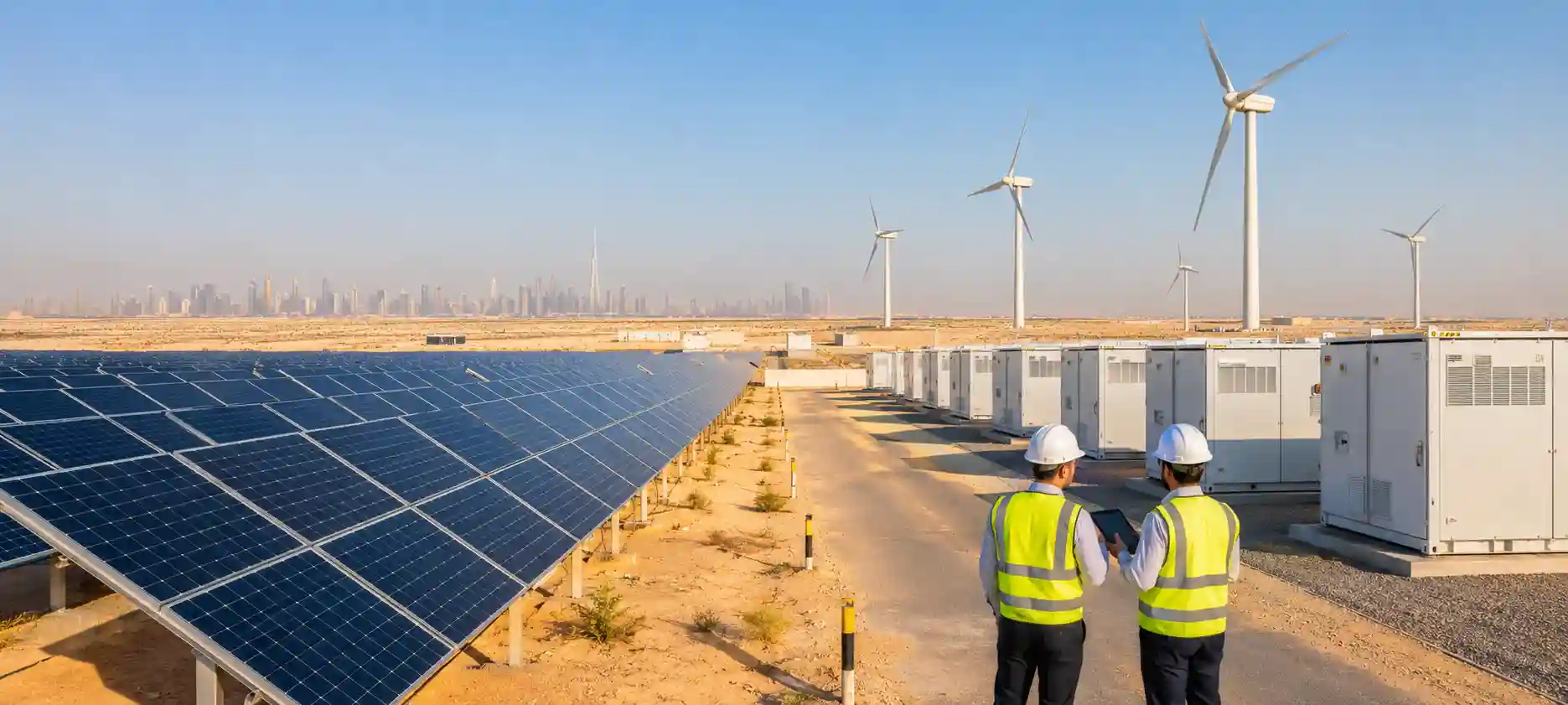
Solar underperformance attributed rather than investigated. Output decline explained as soiling or panel degradation without structured investigation into inverter faults, string failures or shading changes that have developed since commissioning.
How We Engage
A gap assessment across the portfolio comes first — asset register and criticality, maintenance strategy and condition monitoring, energy performance, electrical and plant safety, environmental management, contractor oversight, outage and emergency planning, and grid compliance obligations.
Documentation is then built around how the portfolio is actually run: asset management policy and strategic asset plan, maintenance and condition monitoring procedures, energy performance procedures, high-voltage safety and permit systems, environmental monitoring, contractor control, and outage response plans.
Multi-site portfolios almost always benefit from integration. One central team usually supports several plants, and running four separate audit cycles across the same people produces fatigue rather than assurance.
Before Lender or Offtaker Diligence
We prepare operators for certification audits, surveillance visits, recertification, lender and offtaker due diligence, and regulatory inspection. This means plant and substation walkthroughs, asset and maintenance record review, verification of energy performance data, and confirmation that corrective actions closed properly.
Hydrogen and EV Charging
We also support organisations developing hydrogen production facilities and EV charging infrastructure. Requirements in both areas are still consolidating around established asset, safety and energy management frameworks rather than dedicated standards, which in practice means ISO 55001, ISO 45001 and ISO 50001 carry most of the load.
Control System Security
Generation and grid assets depend on SCADA, energy management systems and, increasingly, remote monitoring of distributed renewable assets spread across sites nobody visits daily. That last category tends to be the weakest link. Through VAPT Security, operators can access SCADA and energy management system assessment, OT network segmentation review, remote monitoring and vendor access review, and infrastructure penetration testing.
Training Across Sites
Safety work across power and renewable portfolios consistently identifies the same needs: high-voltage electrical safety, LOTO and permit-to-work, working at height, confined space entry, fire safety and emergency response, first aid, and incident investigation. Delivered through NIMS.
Ownership Inside the Business
Asset management systems fail when they are handed to a quality department with no authority over maintenance budgets. The people who need to be in the project are the asset director, operations manager, maintenance and asset manager, reliability engineer, QHSE manager, energy performance manager and contracts manager — because the decisions the system is meant to improve are theirs.
FAQ'S
Not generally as a legal requirement, though efficiency reporting expectations exist in some emirates and for large consumers. Most operators adopt it to structure improvement work and support sustainability reporting.
It connects maintenance to strategic decision-making — linking asset criticality, lifecycle cost, risk and capital planning — rather than treating maintenance as a self-contained operational function.
ISO 9001, ISO 14001 and ISO 45001 as a core, with ISO 55001 where long-term asset performance drives returns and ISO 50001 where the operator also manages consumption.
It can. Certified systems provide structured evidence on asset management, safety and environmental performance, which generally shortens the operational portion of diligence.
Yes. It suits network assets well, supporting condition-based maintenance, replacement forecasting and criticality-driven investment across distributed infrastructure.
Less than starting fresh. The management review, internal audit and corrective action machinery already exists. The new work is largely the asset-specific content: criticality classification, lifecycle planning and performance measurement.
Where We Work
Gas-fired plants in Abu Dhabi, solar projects in Dubai, transmission networks in Sharjah, renewable developments across Saudi Arabia including NEOM and Sakaka, and energy businesses in Oman, Qatar, Bahrain and Kuwait. Services cover ISO 55001, ISO 50001, ISO 9001, ISO 14001, ISO 45001, ISO 22301 and integrated management system implementation.


0
Projects

0
Services

0
Clients Serving

0
Countries Serving